This video offers a compelling and engaging glimpse into a unique creative project, capturing both imagination and storytelling in a visually striking way. Through its dynamic visuals and carefully crafted scenes, it draws viewers into a world that blends creativity, entertainment, and artistic expression. Whether you’re watching for inspiration or simply to enjoy the experience,...
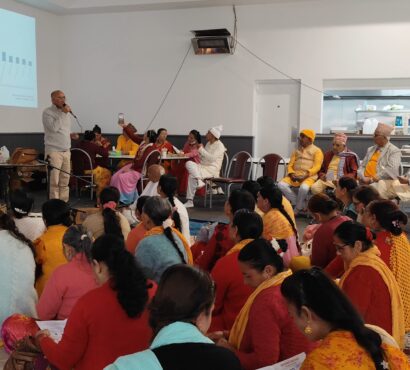
The first cancer awareness session, funded by the Australian Government through Cancer Australia’s Supporting People with Cancer Grant Program, was successfully organised on 27 March 2026 in Paralowie, South Australia. Dr Lakshmi Prasad Dhakal facilitated the session. The session engaged approximately 150 participants from Nepali-speaking migrant communities, creating an inclusive platform to raise awareness about...
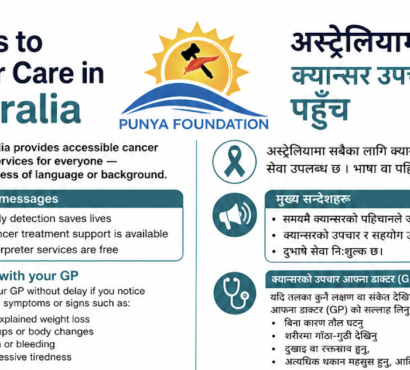
CLICK HERE FOR A BILINGUAL FLYER Australia is committed to ensuring that every person, no matter their language, culture, or background, can access timely, high‑quality cancer care. From early detection to treatment and ongoing support, services are designed to be inclusive, affordable, and easy to navigate. Early detection remains one of the most powerful tools...
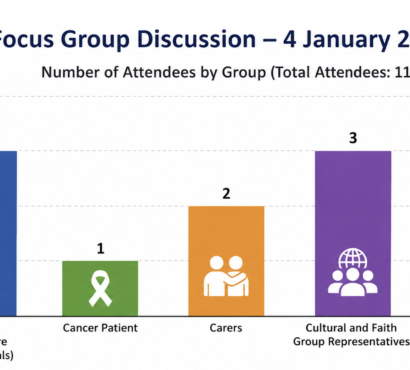
On 4 January 2026, the Punya Foundation convened a face-to-face community consultation to address disparities in cancer awareness, screening, and oncology support within Nepali-speaking communities in Australia. Coordinated by Dr. Lakshmi Prasad Dhakal, the session integrated insights from 11 key stakeholders, including three registered nurses, one cancer patient, two primary carers, three faith leaders, and...

As part of the national initiative to improve cancer awareness and access to care for Nepali-speaking migrant communities, Punya Foundation is commencing the gap analysis phase to better understand cultural and contextual barriers affecting cancer outcomes. A hybrid focus group meeting is planned for 29 November 2025 at 6:00 p.m. (Victoria time). The session will...

Aim and Context: The project addresses key barriers that affect cancer screening and treatment, including limited English proficiency, low health literacy, and cultural differences. Although Nepali is the tenth most spoken language other than English in Australia, awareness of cancer prevention and access to culturally appropriate services remain limited. This project seeks to bridge these...