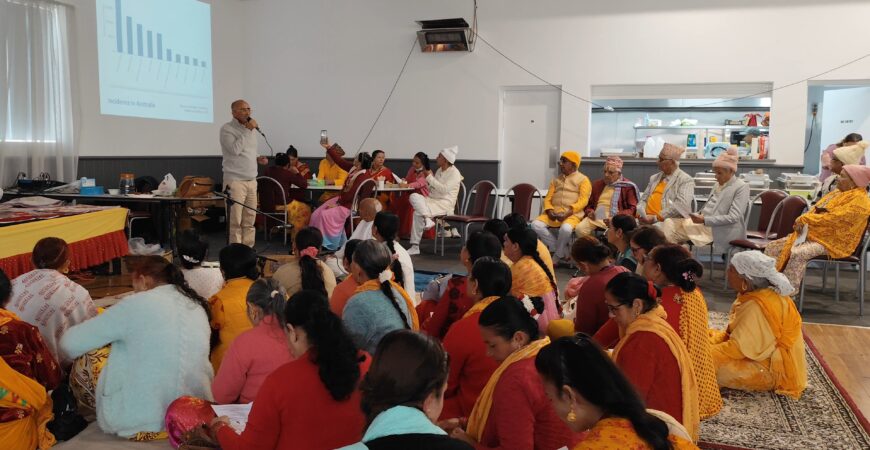
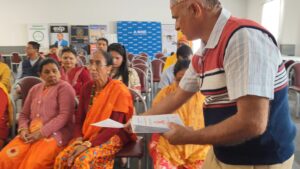
The first cancer awareness session, funded by the Australian Government through Cancer Australia’s Supporting People with Cancer Grant Program, was successfully organised on 27 March 2026 in Paralowie, South Australia. Dr Lakshmi Prasad Dhakal facilitated the session. The session engaged approximately 150 participants from Nepali-speaking migrant communities, creating an inclusive platform to raise awareness about bowel cancer, promote early detection, and improve access to free screening services.
Community Impact: The session achieved strong engagement and exceeded participation expectations, demonstrating the effectiveness of community-led health initiatives. Participants actively took part in discussions and showed strong interest in understanding bowel cancer and the importance of screening. The program ensured inclusive participation, particularly reaching vulnerable groups.
Key highlights included:
- Approximately 100 participants attended, exceeding the initial target
- Strong participation from older adults and people with disabilities
- Active engagement through questions, and group discussions
Bowel Cancer Awareness and Education: A central focus of the session was to increase awareness of bowel cancer, one of the most preventable and treatable cancers when detected early. Participants were encouraged to take screening seriously and understand that early detection can save lives. The session reinforced key messages from the awareness materials, including the availability of free bowel cancer screening kits.
Participants learned that: bowel cancer can develop without obvious early symptoms, regular screening is simple, free, and can detect cancer early, early detection significantly increases chances of successful treatment, lifestyle factors and awareness play an important role in prevention.
The session also highlighted important signs and symptoms of bowel cancer, helping participants recognise when to seek medical advice. Many participants shared that this was their first time learning about these warning signs. Key symptoms discussed included: blood in stool or changes in bowel habits, unexplained weight loss or fatigue, persistent abdominal pain or discomfort, changes in stool consistency, etc.
Inclusive and Culturally Responsive Approach: A culturally sensitive and accessible approach was central to the program’s success. The session was delivered within a trusted spiritual gathering, creating a safe and familiar environment that encouraged participation and open discussion. Bilingual communication ensured that language was not a barrier to understanding critical health information.
This approach included:
- Bilingual (Nepali–English) materials and facilitation
- Visual and interactive presentation methods
- Integration within a cultural and spiritual setting
- Active involvement of community leaders to build trust
Key Learnings: The session provided valuable insights into improving bowel cancer awareness within migrant communities. It highlighted how culturally appropriate and community-based approaches can effectively address stigma and increase participation in screening programs.
Key learnings included:
- Community settings significantly improve engagement and trust
- Visual and interactive methods enhance understanding
- Awareness reduces fear and stigma around cancer
- Trusted community leaders play a key role in behaviour change
 Looking Ahead: Building on the success of this session, there is strong potential to expand bowel cancer awareness initiatives across more communities. Future programs will continue to promote screening and early detection, while strengthening partnerships with health services and improving access to information and support.
Future directions include: promoting free bowel cancer screening kits within the community, expanding awareness sessions to other regions, continuing delivery through cultural and community events, strengthening partnerships with health organisations and introducing structured evaluation to measure long-term impact.