
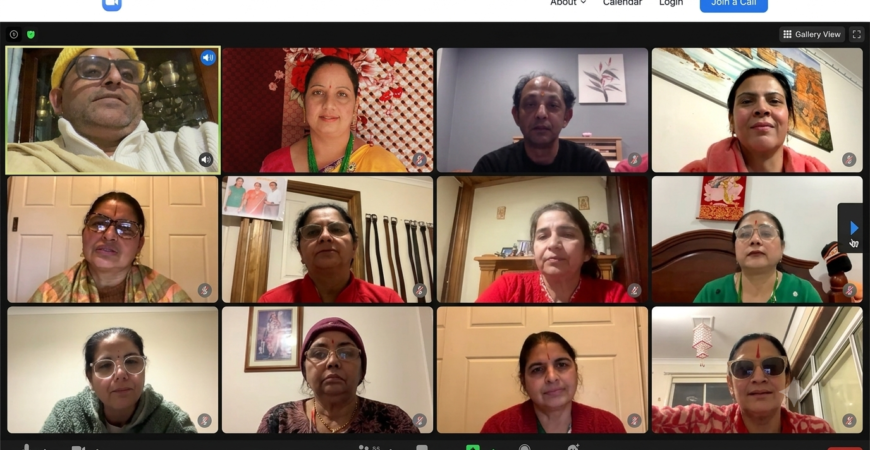
The Punya Foundation’s Cultural Empowerment and Community Engagement Project strengthens social cohesion, cultural identity and community wellbeing among migrant and multicultural families across Australia. Delivered virtually, the program provides structured cultural education for children and adults, helping participants build confidence, reduce isolation and maintain meaningful connections to their heritage while actively participating in Australian society.
Purpose & Vision: Grounded in the Foundation’s mission of Justice through Education and Empowerment, the project supports children to develop emotional resilience and cultural pride, while assisting adults—particularly women—to build peer networks, leadership skills and a stronger sense of belonging. The initiative reflects Australia’s multicultural values of respect, inclusion, equality, participation and mutual understanding, ensuring cultural heritage becomes a bridge to active citizenship.
Program Streams
- Children’s Cultural Empowerment (Weekly): Interactive sessions combining Nepali/Sanskrit language learning, storytelling, cultural exploration and value‑based reflection. Children develop confidence, cultural identity and emotional wellbeing.
- Adult Cultural Learning & Engagement (Five Days per Week): Women‑led cohorts offering language study, spiritual discourse and recitation, practical life skills, cultural knowledge‑sharing and guided discussions. Participants reduce isolation, strengthen community ties and increase civic participation.
Leadership & Delivery: The program is led by Acharya Santiram Upadhaya Dhakal, supported by a dedicated team of cultural educators—Ms Yoga Bhattarai, Ms Pavitra Dahal Nepal, Ms Ghana Dabadi, Ms Madhavi Dhakal and Ms Dhan Maya Adhikari—who serve on rotation. Logistics and operational coordination are managed by Mr Hem Adhikari. Sessions are delivered through secure virtual platforms, with minimal printed materials provided to supplement learning.
Community Impact
- Strengthened spiritual, cultural identity and belonging
- Reduced social isolation and improved mental wellbeing
- Increased community participation and volunteering
- Enhanced intercultural understanding and resilience
Our Challenge: While virtual delivery has enabled broad participation, it cannot replace the value of meeting face‑to‑face. Community members consistently express a desire for a shared physical space where they can build stronger relationships, celebrate cultural events, volunteer together and support one another in person. Regular in‑person interaction is vital for reducing loneliness, improving wellbeing, strengthening social cohesion and creating the genuine sense of belonging that underpins healthy, resilient communities.
At Punya Foundation, we remain dedicated to empowering people through culture, education and community engagement. Together, we are helping build a stronger, more connected and more inclusive Australia—one family, one conversation and one community at a time.