
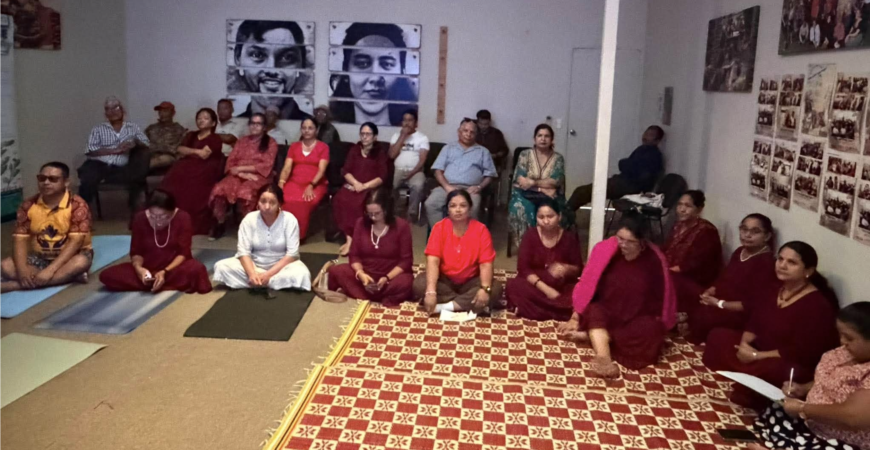
The Cairns Bhutanese Community Inc., in support of Punya Foundation Inc., successfully conducted its second Cancer Awareness Project session at Centacare FNQ. This program was proudly funded by the Australian Government through Cancer Australia’s Supporting People with Cancer Grant Program. Read the full report HERE.
Building on previous efforts, this iteration saw a major surge in engagement, attracting 43 participants—nearly doubling the attendance of the prior session. This impressive turnout highlights a rapidly growing community interest in health education and proactive preventative care.
Delivered by Mr Mahesh Upadhaya, a pharmacy-background PhD researcher from James Cook University, the session was presented entirely in Nepali. Using the attendees’ native language ensured the complex medical information was both culturally accessible and deeply understood.
Key takeaways: the comprehensive session empowered community members with vital information regarding bowel health and disease prevention:
- Understanding the Bowel: Participants learned how the small and large intestines function, establishing a foundation to recognise when something is wrong.
- Early Detection is Key: The session explained that bowel cancer develops slowly from polyps over 10 to 15 years. Because it is highly treatable when caught early, routine screening is crucial.
- Recognising Symptoms & Risks: Attendees were educated on red flags—such as persistent changes in bowel habits, blood in the stool, or unexplained weight loss—and lifestyle risks like diet, smoking, and age.
- The Screening Process: The presentation provided practical, step-by-step instructions on utilising Australia’s free National Bowel Cancer Screening Program kits, which are mailed every two years to eligible residents aged 50 to 74. It also demystified next steps, such as colonoscopies following a positive result.
Ultimately, the event successfully equipped the community with the practical tools and confidence needed to take charge of their health, reinforcing the life-saving impact of early detection.